
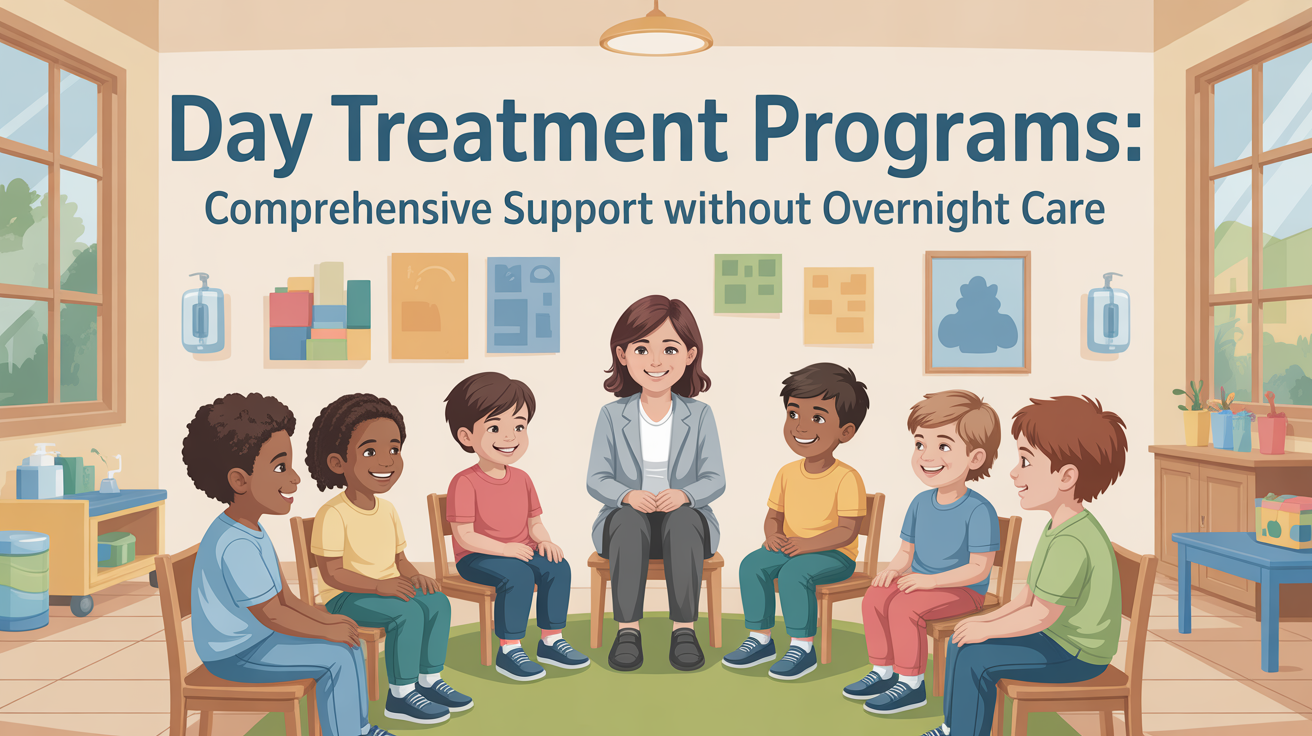

When individuals face emotional, behavioral, or mental health challenges that require more than weekly therapy but don’t need 24/7 care, a day treatment program can offer the structured support they need — without staying overnight in a facility. Day treatment bridges the gap between outpatient therapy and residential care, delivering intensive services during the day while allowing participants to return home each evening.
At ADWO Cares, we’re committed to empowering children, teens, and adults with compassionate behavioral health services that support long-term growth and stability. As we enter 2026, day treatment continues to be one of the most effective options for individuals who need consistent, therapeutic care while remaining connected to their families and communities.
A day treatment program, often referred to as partial hospitalization, provides structured therapeutic services for several hours a day, multiple days a week. Participants receive intensive mental and behavioral health support during the day and return home in the evenings.
Unlike traditional outpatient therapy, which may only occur once a week, day treatment offers a higher level of care that includes ongoing therapeutic engagement, routine, and accountability. This structure helps individuals build stability while still maintaining important connections to home, school, or work.
Day treatment is well-suited for individuals who need more support than outpatient therapy can provide but do not require residential care. This includes children, teens, and adults who are struggling with emotional regulation, anxiety, depression, behavioral challenges, or difficulty functioning in daily life.
It is also a strong option for individuals transitioning out of inpatient care who benefit from continued structure and support as they reintegrate into their everyday routines. Families often find day treatment helpful because it allows healing and skill-building to continue without completely removing the individual from their home environment.
Most day treatment programs include a combination of therapeutic services designed to support emotional, behavioral, and mental wellness.
Individual therapy allows participants to work one-on-one with a clinician to identify goals, process challenges, and build personalized coping strategies. Group therapy provides opportunities to develop communication skills, emotional awareness, and peer support in a guided setting.
Skill-building activities focus on practical tools such as emotional regulation, stress management, and healthy decision-making. When clinically appropriate, psychiatric services may also be included to support medication management and symptom stabilization.
Together, these components create a comprehensive and supportive treatment experience that promotes long-term success.
Day treatment offers intensive therapeutic support without the disruption of overnight care. The structured daily schedule provides consistency and routine, which can be especially beneficial for individuals who struggle with emotional or behavioral regulation.
Participants gain real-world coping skills that can be practiced immediately in their home environments. This balance between structured treatment and daily life helps reinforce progress and build confidence. Day treatment also allows individuals to maintain important family, educational, and community connections while receiving meaningful care.
Residential treatment offers 24-hour supervision and is typically reserved for individuals with severe or acute needs that require constant support. Outpatient therapy, on the other hand, provides less frequent care and is often best for individuals who are already relatively stable.
Day treatment sits between these two options. It provides a higher level of structure and intensity than outpatient therapy while allowing individuals to live at home. This makes it an ideal solution for those who need consistent support but also benefit from maintaining their everyday routines.
Day treatment may be a good fit if weekly therapy has not been enough, if emotional or behavioral challenges are impacting daily life, or if a structured routine is needed to support progress. It can also be helpful for individuals stepping down from inpatient care or those seeking intensive support without full-time residential placement.
A behavioral health professional can help determine whether day treatment aligns with an individual’s specific needs and goals.
At ADWO Cares, we believe effective treatment involves both the individual and their support system. Our approach emphasizes compassion, evidence-based care, and collaboration with families to create lasting change.
As we continue to expand our resources and services in 2026, we remain committed to helping individuals and families understand their options and access the support they need.




Please submit your email address and we will reach out to you
And we'll reach out to you

